Home / Cabinet Door Styles
Cabinet Door Styles
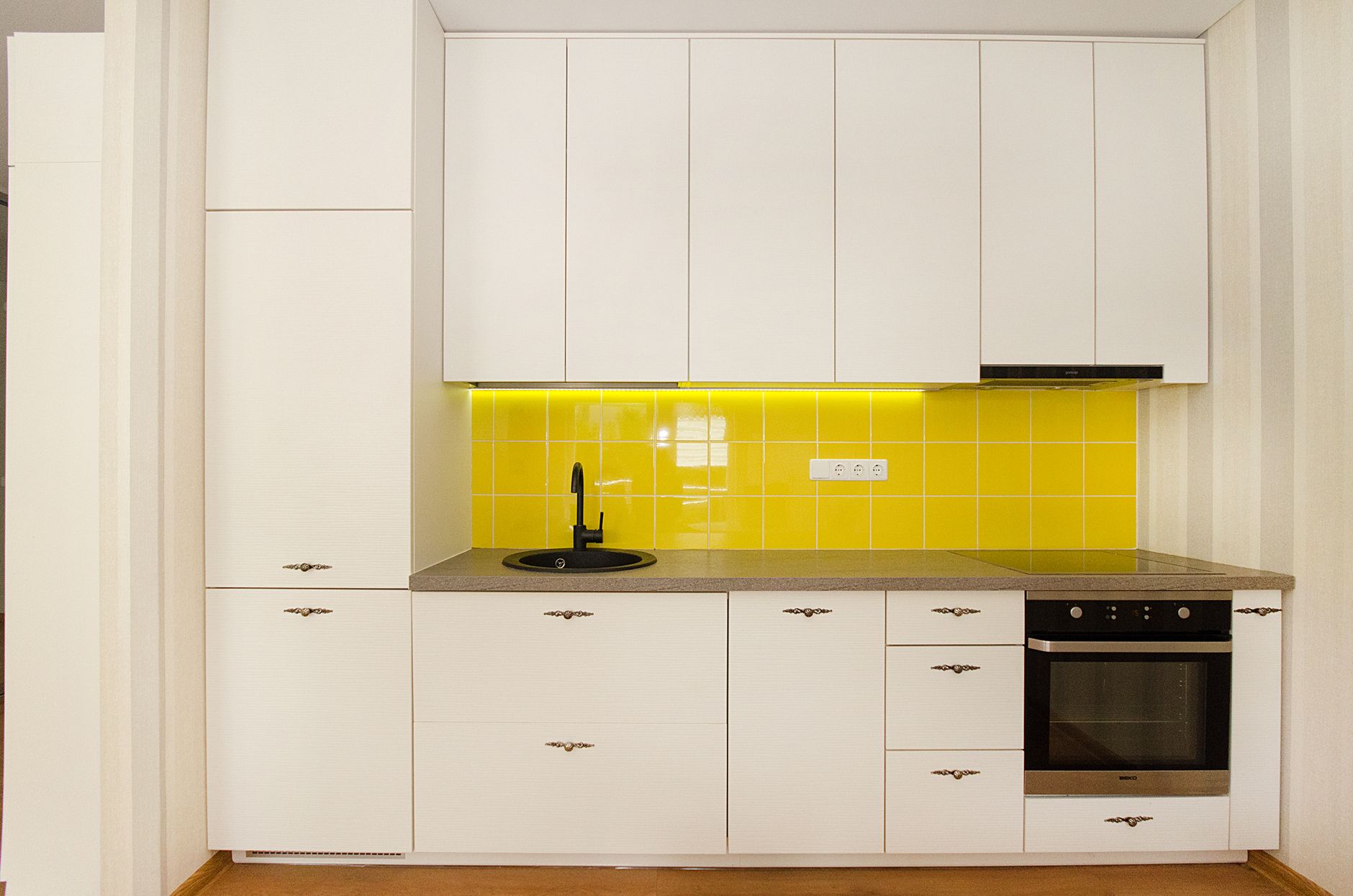
Four doors, four personalities
Stand in a kitchen with the cabinet doors closed and one thing sets the mood more than color or hardware: the shape of the door itself. A flat slab reads as modern and quiet. A five piece door with a recessed center reads as casual and timeless. A door with a carved, raised center reads as formal. A door that sits flush inside the frame reads as tailored and precise. Each is a different construction with its own strengths, quirks and maintenance habits.
This page describes the four main families, how each is made, which looks they create and where they tend to give trouble, so the choice can rest on more than a photograph.
Slab doors
A slab door is a single flat panel with nothing applied to the face. It may be solid wood, plywood with a veneer, or a fibre core wrapped in laminate or foil, and its edges may be square, softly eased or finished with a contrasting band. The lack of rails and grooves gives the door a clean, continuous look that works in contemporary and minimalist kitchens.
Because a slab has no joints on its face, it is easy to wipe, and nothing collects dust in a groove. The trade off is that all of the character comes from the material, so the grain, the veneer match and the edge treatment carry the whole design. A solid wood slab can warp across its width if it is wide and unsupported, so wide slab doors are often built from veneered plywood or from cores that resist movement. Flat slab fronts also show every fingerprint and scratch on glossy surfaces, which is worth knowing before choosing a high sheen.
Shaker doors
The shaker door is a five piece design: two vertical stiles, two horizontal rails and a flat center panel set into a groove. Its plain, square profile has made it the best selling style for years, since it fits cottage, farmhouse, transitional and even modern rooms depending on color and hardware. The recessed flat panel casts a gentle shadow line that gives painted doors a crisp outline.
Construction details change the look. Wider rails and stiles feel bold and traditional; narrow ones feel lighter and more contemporary. The center panel can be plywood, solid wood or fibreboard. One known weakness is the joint where rail meets stile: a painted shaker door may show a hairline crack at those corners as the wood shifts across the seasons. A dedicated article on shaker doors covers how those joints are made and why paint cracks there.
Raised panel doors
A raised panel door has the same stile and rail frame, but the center panel is shaped with a profile that bulges outward toward the middle, with a bevel or an ogee curve at its perimeter. The look is traditional and formal, reminiscent of older wood paneled rooms and furniture. It suits stained cherry, walnut or oak and is often combined with crown moulding, decorative corbels and glazed finishes that highlight the shape.
Several variations exist: a flat raised panel with an angled edge, a cathedral arch at the top of the door, a square arched variant and a full curved profile. The shaping adds depth, but it also adds places where dust and grease can settle, and the deeply cut grooves need a soft brush now and then. Because a raised panel is thick in the middle and thin at its edges, it expands unevenly and must float freely in the groove so the frame is never pushed apart.
Inset doors
An inset door sits inside the face frame opening, flush with the frame rather than covering it. Of all the styles, it is the most demanding to build, because the gap around each door has to be even on all four sides and stay that way through the seasons. Done well, it looks like furniture, and the exposed face frame becomes part of the design. The hinges may be hidden specialty hinges or exposed decorative butt hinges that make a feature of themselves.
Seasonal movement is the practical issue. If the door swells in humid weather and there is no room, it will stick; if it shrinks in dry weather, the gap opens up. For that reason inset work needs extra planning, covered in inset doors and their reveals. Many homeowners who love the look accept a slightly larger gap to leave room for movement.
Overlay: how much of the frame shows
Outside the inset family, doors lie over the opening, and the amount they overlap defines the look. A full overlay door covers nearly the entire frame, leaving a thin reveal between neighbours and giving a clean, continuous appearance. A partial overlay leaves more of the frame visible, a more traditional look that also tolerates small variations in the box. Frameless cabinets are naturally full overlay, because the door covers the entire box edge.
The overlay choice decides which hinge is needed, since a hinge is built for a particular overlay measurement, and that detail is described in the article on hinges and drawer slides.
Panel construction inside the frame
For any door with a frame, the center is where builders have the most latitude. It can be flat, raised, beaded, grooved or filled with glass, mesh or woven cane. A beadboard center, with narrow vertical grooves, suits cottage kitchens. A glass center lightens a wall run and displays dishes, though it asks for tidy shelves. A cane or mesh center adds texture and lets air move through a cabinet.
The way the center is fastened matters. A panel that is glued rigidly into its groove cannot move, and the frame cracks when the panel tries to expand. A panel held with small flexible beads of rubber or left to float freely never fights the frame. This is the single most important construction detail inside a door and the main reason well made doors outlast rushed ones. Readers who want to see how doors of different styles look in everyday kitchens can find examples in the longer articles on austin custom cabinets compass, where the photographs and descriptions put each style in a real room.
Matching style to the house
A style that looks right in one house can look forced in another. Some pairings come up repeatedly:
- A mid century or modern house usually calls for slab doors, often in a wood veneer with minimal hardware.
- A farmhouse, cottage or ranch style home tends to suit shaker doors in paint or a light stain.
- A formal or older traditional home suits raised panels and stained wood.
- A house with a strong furniture look, such as a library or a butler pantry, suits inset doors and exposed hinges.
None of these is a rule. Plenty of successful kitchens mix slab drawer fronts with shaker doors, or use raised panels on the island only, as a focal point. The test is whether the doors feel consistent with the trim, the floors and the lines of the room.
Cleaning and wear by style
Flat doors are the easiest to wipe. Shaker doors need an occasional pass along the inside corner of the recess. Raised panels and any door with a carved or beaded profile trap residue and need a soft brush. Inset doors need a clean gap on all sides so hinges stay free. High sheen finishes show marks in any style, while matte and satin hide them. The finishing choice and the door style work together, a topic taken up in paint and stain finishes on cabinets.
A short decision path
- Start from the character of the house and the other finishes in the room.
- Choose between flat, recessed, raised or flush as the base shape.
- Pick an overlay amount that matches the cabinet type, framed or frameless.
- Check that the center panel can float and that the frame joints are sound.
- Look at a full size sample door in the room's own light before committing.
A door style is a long term decision, since swapping doors later means redoing hinges, hardware and finish. A little time with full size samples tends to prevent most regrets.